


One of the first questions prospective clients ask us is, “How much does Executive Protection cost in Washington, DC?” It is a reasonable question, particularly for someone who has never hired a professional protection firm before.
At Samaritan Protective Services, our standard Executive Protection Agent rates generally range from approximately $60 to $150+ per hour, per agent. Armed, specialized, or unusually complex assignments may reach $200+ per hour depending on the needs of the mission. Additional requirements such as Security Drivers, vehicles, advance personnel, travel, or specialized support are priced based on the needs of the assignment.
The hourly rate, however, is only part of the answer. Executive Protection is not a commodity where every provider, agent, and assignment can be compared simply by looking at a price per hour. A corporate executive visiting Washington for two days of private meetings has a very different requirement from a high-profile individual attending a public event, a principal who has received a credible threat, or a family requiring protection during an elevated period of concern. The appropriate level of protection, and therefore the cost, should be based on the actual risk, environment, itinerary, and mission.
This is particularly important in Washington, DC. The National Capital Region is a unique protective environment unlike almost anywhere else in the country. Federal facilities, embassies, diplomatic residences, government offices, major corporations, demonstrations, motorcades, political events, high-profile hotels, restricted locations, and complex firearms regulations all exist within a relatively small geographic area. Conditions can change quickly, and a protection provider operating here needs to understand far more than simply how to place an agent beside a client.
Samaritan Protective Services has provided protective services, intelligence, and risk advisory support to diplomatic, corporate, and high-net-worth clients since 2015. Our approach is based on understanding the mission first, then determining what personnel, intelligence, transportation, and other resources are appropriate. For some clients, that may mean one discreet Executive Protection Agent. For others, it may require a more comprehensive protective detail.
What Does Executive Protection Cost in Washington, DC?
For budgeting purposes, Samaritan’s standard Executive Protection Agent rates generally range from $60 to $150+ per hour, per agent. Armed, specialized, or unusually complex assignments may reach $200+ per hour depending on the mission. Where an assignment falls within that range depends on a number of factors, including whether the agent is armed or unarmed, the nature of the threat, the qualifications required, the length of the assignment, the amount of advance planning involved, and the complexity of the principal’s schedule.
A relatively straightforward assignment might involve an executive arriving in Washington for several business meetings, moving between controlled locations, and departing at the end of the day. Another assignment may involve multiple public appearances, extensive media attention, known threats, demonstrations near a destination, several movements throughout the city, or a requirement for armed personnel. Those two assignments should not be priced or staffed the same way.
Armed Executive Protection generally carries a higher cost because it involves additional licensing, qualifications, training, liability, and operational considerations. Washington, DC also creates specific legal and regulatory issues that must be considered before armed personnel are assigned. A professional provider should evaluate those issues during the planning process rather than treating the presence of a firearm as a simple upgrade to an otherwise identical service.
Clients should also understand that the Executive Protection Agent’s hourly rate does not necessarily include every component of the operation. Security Drivers and vehicles are separate services at Samaritan because protective driving requires a distinct skillset. Additional agents, advance work, protective intelligence, travel expenses, or other requirements may also affect the final price.
The purpose of an initial consultation is to determine what the assignment actually requires. A responsible provider should not automatically recommend the largest possible detail, but it should also be willing to explain when a client’s requested staffing is insufficient for the mission.
Executive Protection and Security Guards Are Not the Same Thing
Executive Protection and traditional security guards are both important professions, but they serve different purposes and operate very differently. This distinction is often misunderstood, particularly by clients who are hiring protective services for the first time.
Traditional security is generally centered around a location, property, facility, event, or defined post. Security personnel may control access, screen visitors, patrol property, protect assets, enforce site rules, monitor cameras, or provide a visible deterrent. Their responsibilities are normally associated with a relatively defined operating environment.
Executive Protection is centered around a person, often referred to within the profession as the principal. The environment moves with that individual. The principal may leave a residence in Northern Virginia in the morning, travel into Washington, attend meetings at several locations, have lunch at a restaurant, participate in an event, return to a hotel, and leave for an airport later in the evening. Each movement changes the operating environment, the available resources, the level of public exposure, and potentially the risk.
A professional Executive Protection Agent must continuously think beyond the immediate physical space around the principal. What is happening at the next location? Which entrance should be used? Where will the vehicle be positioned? Has anything changed along the route? Is there a demonstration nearby? Where is the closest appropriate medical facility? What happens if the scheduled entrance becomes unavailable? Where does the principal go if the original plan cannot be used?
Those are fundamentally different responsibilities from protecting a fixed location.
The distinction is especially relevant in Washington, DC because Special Police Officers, or SPOs, perform an important but different security function. SPOs are regulated by the Metropolitan Police Department through its Security Officers Management Branch and operate within a specific District framework. They are uniformed personnel whose authority is tied to the properties and duties for which they are commissioned.
Executive Protection is not simply another name for SPO or uniformed security work. A discreet protection professional accompanying a corporate executive, diplomat, or high-net-worth individual through multiple locations has a different mission and requires a different operational approach.
How Much Does a Bodyguard Cost in Washington, DC?
“Bodyguard” is still one of the most common terms people use when searching online for personal protection, and someone searching for the cost of a bodyguard in Washington, DC is often looking for what the professional industry refers to as Executive Protection or Close Protection.
The difference is more than terminology. The word bodyguard tends to create an image of an imposing individual physically standing beside a client. Professional Executive Protection is much broader.
The visible agent is only one element of a properly planned protective operation. Protection may begin hours or days before the principal arrives through intelligence review, itinerary analysis, coordination with venues, route planning, advance work, and the development of contingency plans. The objective is not simply to respond effectively if something goes wrong. Whenever possible, it is to identify a developing problem early enough that the principal never encounters it.
That is an important part of what a client is paying for when hiring a professional Executive Protection provider.
What Factors Affect the Cost of Executive Protection?
The most significant factor is the mission itself. Risk, exposure, environment, schedule, personnel requirements, and the principal’s profile all influence how a detail should be structured.
Threat level is one obvious consideration. There is a meaningful difference between an executive with no known threats attending controlled private meetings and someone dealing with stalking, threats, contentious litigation, a sensitive workplace termination, or a highly publicized event. A credible or elevated threat may require additional personnel, armed coverage, more extensive advance work, enhanced intelligence monitoring, or coordination with law enforcement and other security teams.
Public exposure also matters. An executive conducting private meetings in controlled offices presents a different protective challenge than a principal moving through large public events, conferences, media appearances, demonstrations, or widely advertised functions. The greater the exposure, the more variables the protection team needs to consider.
Schedule complexity can also affect the cost. Multiple locations mean additional movements, routes, arrival points, departure plans, venue coordination, and contingency planning. A principal moving through six locations across Washington has a different requirement from someone remaining inside one controlled venue for most of the day.
Personnel requirements are another major factor. Some assignments can be appropriately supported by one experienced Executive Protection Agent. In other cases, attempting to use one person for every responsibility creates unnecessary gaps. An agent cannot remain fully focused on the principal while simultaneously driving the vehicle, advancing the next location, monitoring developing intelligence, coordinating with venue security, and preparing the next movement. When several tasks must occur at the same time, additional personnel may be necessary.
Time also extends beyond what appears on the principal’s calendar. An eight-hour business itinerary does not always translate into eight hours of protective work. Agents may need to review intelligence, conduct advance work, inspect vehicles, review routes, coordinate with other security teams, and arrive before the principal’s first movement. The protection team’s day often begins before the client’s scheduled day does.
What Qualifications Should an Executive Protection Agent Have?
Professional Executive Protection requires more than simply having experience in security or carrying a firearm. The profession combines planning, judgment, interpersonal skills, situational awareness, risk management, emergency response, and specialized protective training.
Samaritan’s Executive Protection Agents are highly trained and certified professionals from a diverse range of backgrounds, including intelligence, military service, law enforcement, security operations, and other protective disciplines. Our agents are also graduates of nationally recognized protective services academies and professional training programs.
Each of those backgrounds can contribute valuable experience, but no single background automatically makes someone an Executive Protection professional. A former military member may bring exceptional operational discipline. A law enforcement professional may have considerable experience dealing with people, threats, and rapidly changing situations. An intelligence professional may bring particularly strong analytical and threat-recognition capabilities. Professional Executive Protection requires those experiences to be combined with the specific skills necessary to protect a principal in a dynamic environment.
Just as important is discretion. Most corporate executives, diplomatic clients, and high-net-worth individuals are not looking for someone who attracts attention everywhere they go. An effective agent should understand when to be visible and when to blend into the environment. The goal is to provide protection without unnecessarily interfering with the client’s business, schedule, family, or daily life.
Can Executive Protection Agents Carry Firearms in Washington, DC?
Armed Executive Protection can be provided in Washington, DC, but it requires careful consideration of the applicable legal and regulatory environment. The District has strict guidelines and limitations concerning firearms, private security personnel, and where weapons may be carried.
Washington contains an unusual concentration of federal property, government facilities, diplomatic locations, secured venues, and other sensitive environments. The fact that an individual possesses a firearm license, law enforcement background, or authority in another jurisdiction does not mean that person can automatically carry a firearm everywhere a principal may travel within the District.
This is another area where local experience matters. Firearms considerations should be reviewed before the assignment begins, including the principal’s itinerary, venues, transportation plan, and any restrictions that may apply at specific locations.
Samaritan Protective Services ensures that applicable local, District, state, and federal laws and regulatory requirements are followed throughout our protective operations. Depending on the circumstances, an assignment may involve armed personnel, unarmed personnel, or a combination of resources.
A firearm is one potential tool within a larger protective strategy. It is not a substitute for training, planning, intelligence, judgment, or the ability to recognize and avoid a problem before physical intervention becomes necessary.
Are Security Drivers and Vehicles Included in Executive Protection Pricing?

At Samaritan, Security Drivers and vehicles are generally priced separately from the Executive Protection Agent because protective driving is a specialized function with its own skillset.
A Security Driver is not simply a chauffeur. The role involves much more than safely transporting a client from one address to another. A properly trained Security Driver may be evaluating primary and alternate routes, traffic conditions, vehicle positioning, pickup and drop-off locations, potential choke points, emergency movements, vehicle readiness, and coordination with the Executive Protection team.
The Executive Protection Agent riding with the principal has a different primary responsibility. That individual’s attention should remain focused on the principal and immediate protective environment.
On some straightforward assignments, a professional who is appropriately trained in both disciplines may be capable of performing both roles. On more complex assignments, separating the driving and close protection responsibilities allows each person to remain focused on a specific function and generally creates a stronger protective posture.
Vehicles are also mission dependent. A client may need a sedan, SUV, multiple vehicles, airport transportation, a dedicated standby vehicle, or another configuration. Factors such as the number of passengers, luggage, duration, itinerary, and level of risk can all influence the transportation plan and cost.
This is particularly relevant in Washington, where motorcades, demonstrations, emergency incidents, road closures, major events, and security activity can rapidly change what appeared to be a straightforward route.
What Is Advance Work in Executive Protection?
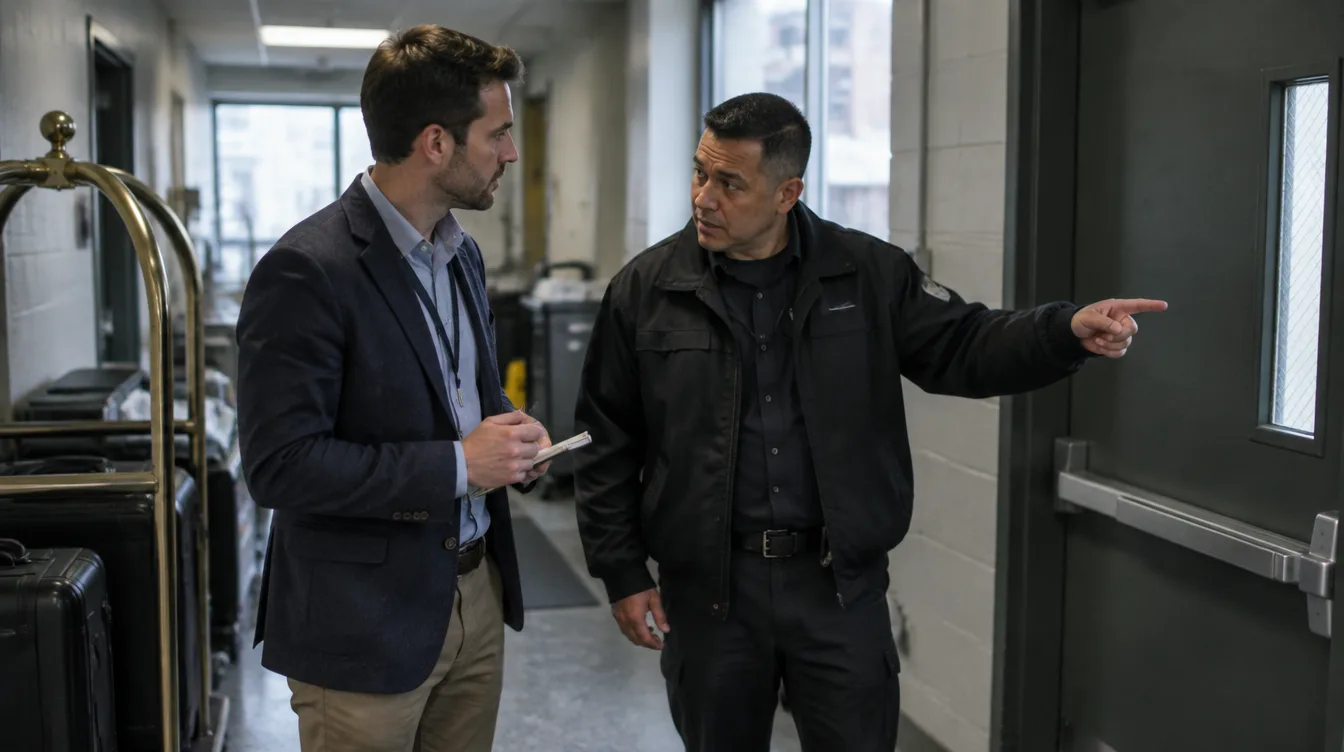
Advance work is one of the most valuable and least visible elements of Executive Protection. It is also one of the clearest examples of why professional protection involves much more than assigning someone to stand next to a client.
Before a principal arrives at a destination, the protection team may evaluate entrances and exits, identify the best vehicle drop-off and pickup points, review parking and staging locations, locate emergency exits, identify nearby medical resources, speak with venue security, evaluate public access, monitor demonstrations or other activity in the area, and establish alternate plans if the original approach becomes unavailable.
Good advance work turns unknowns into knowns.
Finding out in advance that a particular entrance will be closed, that construction has changed the vehicle approach, or that a demonstration is developing near a scheduled destination gives the team time to adjust. Discovering the same issue with the principal already sitting in the vehicle creates an unnecessary problem.
For simple assignments, the primary Executive Protection Agent may be able to conduct the necessary advance work. Complex itineraries may require a separate Advance Agent because the person protecting the principal cannot simultaneously be at the next location preparing for the principal’s arrival.
Does Executive Protection Include Intelligence Monitoring?
This is one of the areas where Samaritan’s Executive Protection capability differs significantly from many traditional protection providers.
Samaritan maintains a dedicated Intelligence Division and a 24/7 Global Security Operations Center, or GSOC, that can provide risk detection, monitoring, and protective intelligence support to active operations.
This means our protection teams do not have to rely solely on what the agent physically sees around the principal. Our intelligence personnel can monitor developments that may affect the client’s destination, route, event, residence, facility, travel, or broader operating environment.
Relevant developments might include demonstrations, public safety incidents, severe weather, transportation disruptions, road closures, threats, online activity, emergency events, or other emerging risks. The value is not simply in knowing that something happened. The value is getting relevant information to the protection team early enough to make a better decision.
If a demonstration begins developing near the principal’s next destination, the team may be able to modify the route, adjust the arrival location, coordinate with the venue, delay the movement, or avoid the area entirely. If severe weather is affecting transportation, the schedule can be adjusted. If a credible threat emerges online, the protective posture can be reassessed.
That is what intelligence-led protection means in practical terms.
Not every Executive Protection provider maintains an internal intelligence capability, and even fewer have access to a 24/7 GSOC capable of supporting protective operations around the clock. Samaritan does. For clients with significant public exposure, frequent travel, higher threat profiles, multiple locations, or rapidly changing operating environments, that capability can provide an important additional layer of situational awareness.
Why Is Washington, DC Different for Executive Protection?
Washington is a unique operating environment because so many different security considerations overlap within such a small area.
A principal may begin the day at a hotel, attend a meeting at a corporate office, travel to an embassy, visit a federal facility, attend a public event, have dinner at a restaurant, and depart for one of the region’s airports that evening. Each location can introduce different access procedures, security considerations, transportation challenges, and restrictions.
At the same time, the city regularly experiences demonstrations, diplomatic activity, motorcades, major public events, government security operations, temporary road closures, and rapidly changing traffic patterns. High-profile political or international events can alter the security environment with little notice.
This is why local knowledge is valuable. A provider should understand that Washington is not simply another metropolitan area where an agent can be given a schedule and several addresses.
The operating environment itself needs to be part of the protective plan.
Samaritan Protective Services has worked in this environment since 2015, providing protective services, intelligence, and risk advisory support to diplomatic, corporate, and high-net-worth clients. That experience informs how we approach movements, compliance, transportation, advance work, intelligence, and coordination throughout the National Capital Region.
Can I Hire Executive Protection for Just One Day?
Yes. Executive Protection does not have to be a permanent or long-term service.
Many assignments involve a specific event, trip, meeting, public appearance, executive visit, conference, diplomatic function, airport movement, court appearance, media engagement, family event, or temporary period of elevated concern. A client may require support for a few hours, a single day, several days, or an extended period.
Short-duration assignments still benefit from professional planning. Even if a client only needs protection for one day, the provider should understand the itinerary, operating environment, transportation plan, public exposure, and any known concerns before the assignment begins.
Whenever possible, additional lead time improves the team’s ability to plan. However, Executive Protection is frequently needed because something unexpected has occurred. Threats, stalking, workplace incidents, sensitive employee terminations, litigation, emergency travel, unwanted media attention, and other situations can create short-notice requirements.
Samaritan can evaluate both planned and urgent protective needs.
Do CEOs and Corporate Executives Need Executive Protection?
Not every CEO or senior executive needs full-time protection, and job title alone should not determine the answer.
Executive risk can be influenced by public visibility, industry, wealth, travel patterns, workforce issues, employee terminations, litigation, activism, media exposure, previous threats, international operations, family considerations, or geopolitical events affecting the organization.
Some executives may require ongoing protection. Others may only need coverage during business travel, shareholder meetings, contentious terminations, conferences, major public events, periods of elevated media exposure, or other specific circumstances.
A professional risk assessment can help determine whether Executive Protection is appropriate and what level of coverage makes sense. The objective should be to match the protective posture to the actual risk rather than either under-protecting the client or unnecessarily surrounding them with personnel they do not need.
Can Executive Protection Be Discreet?
Yes, and in many cases discretion is essential.
Professional protection does not need to look like the highly visible security details associated with heads of state or major celebrities. Corporate executives, diplomatic clients, high-net-worth individuals, family offices, and other private clients frequently prefer protection that blends naturally into their environment.
An experienced Executive Protection Agent should be able to remain close enough to perform the mission while minimizing unnecessary disruption to the client’s activities. Business attire, discreet communications, appropriate positioning, and coordination occurring behind the scenes can all help provide an effective protective presence without drawing unwanted attention.
The level of visibility should always be driven by the mission and risk.
How Much Does 24/7 Executive Protection Cost?
Continuous Executive Protection should be viewed as a protective program rather than one agent working around the clock.
A single individual cannot safely or professionally provide continuous coverage. A 24-hour operation requires multiple personnel working shifts, relief coverage, scheduling, supervision, and potentially additional capabilities such as Security Drivers, vehicles, protective intelligence, residential security, or advance support.
As a result, the total cost can vary considerably depending on the principal, location, threat, number of people being protected, required staffing levels, and supporting services.
This is one situation where simply multiplying an hourly rate by 24 does not provide an accurate picture of the actual program cost. The provider should first determine what a sustainable protective operation requires and then develop pricing around that structure.
How Far in Advance Should Executive Protection Be Booked?
Whenever possible, earlier is better. A known executive visit, conference, international delegation, public appearance, or multi-day itinerary may benefit from being planned days or weeks in advance. Additional lead time allows for personnel selection, advance work, intelligence preparation, venue coordination, transportation planning, and a more thorough review of potential risks.
That said, Executive Protection is often requested precisely because circumstances changed unexpectedly. Samaritan can evaluate urgent requirements and short-notice deployments when threats, workplace incidents, stalking, litigation, emergency travel, family concerns, or other developments create a need for immediate support.
The most important thing in an urgent situation is to provide the protection provider with accurate information. The better the team understands what has happened, who is involved, where the principal needs to go, and what concerns exist, the faster an appropriate protective plan can be developed.
What Information Do I Need to Get an Executive Protection Quote?
Clients do not need to design the protective detail themselves before contacting us. That is part of the provider’s job.
To begin developing a quote, we generally need to understand who requires protection, when and where the assignment will occur, the approximate schedule, the nature of the principal’s activities, whether transportation is required, whether there are known threats or security concerns, whether public or high-profile events are involved, and whether armed protection is being considered.
From there, we can begin determining whether the mission calls for one Executive Protection Agent or a larger team, whether Security Drivers and vehicles are needed, whether advance work should be conducted, and what level of intelligence support may be appropriate.
The purpose of that process is not to make the assignment unnecessarily complicated. It is to make sure the resources being recommended actually match the need.
How Do You Choose an Executive Protection Company in Washington, DC?
Price should be part of the decision, but it should not be the only consideration.
A prospective client should understand who will actually be assigned to the detail, what training and professional experience those individuals have, whether the company understands the Washington operating environment, how the firm handles transportation and advance work, and whether personnel are properly licensed and operating within applicable laws and regulations.
Clients should also consider what exists behind the individual agent.
Who is monitoring developing conditions? Who can support the agent if the environment changes? Is there an operations capability available after normal business hours? Can the provider support protective intelligence as well as physical protection? Does the firm have the ability to scale a one-person detail if the risk changes?
At Samaritan, the Executive Protection Agent is part of a broader protective capability. Our teams can be supported by risk management professionals, advance planning, trained Security Drivers, a dedicated Intelligence Division, and our 24/7 GSOC.
That integrated approach is especially valuable in Washington, DC, where conditions can change quickly and where intelligence, local knowledge, planning, discretion, and regulatory compliance can be every bit as important as the person physically accompanying the principal.
Need Executive Protection in Washington, DC?
If you are planning an executive visit, attending a high-profile event, responding to a security concern, arranging protective transportation, or evaluating longer-term protection, the first step is a confidential conversation about the mission.
Samaritan Protective Services has provided Executive Protection, protective intelligence, and risk advisory services to diplomatic, corporate, and high-net-worth clients since 2015. Our Executive Protection Agents are highly trained, certified professionals from intelligence, military, law enforcement, security, and other protective backgrounds and are graduates of nationally recognized protective services academies.
Whether the appropriate solution is one discreet Executive Protection Agent, armed coverage, a dedicated Security Driver and vehicle, intelligence support, or a more comprehensive protective detail, our team can help determine the appropriate level of coverage and provide a customized quote.
To discuss an upcoming requirement, contact Samaritan Protective Services at 866-906-2334 or info@samaritanps.com.
Planning Executive Protection in Washington, DC?
Contact Samaritan Protective Services for a confidential consultation and a customized quote.
Request an Executive Protection Quote