

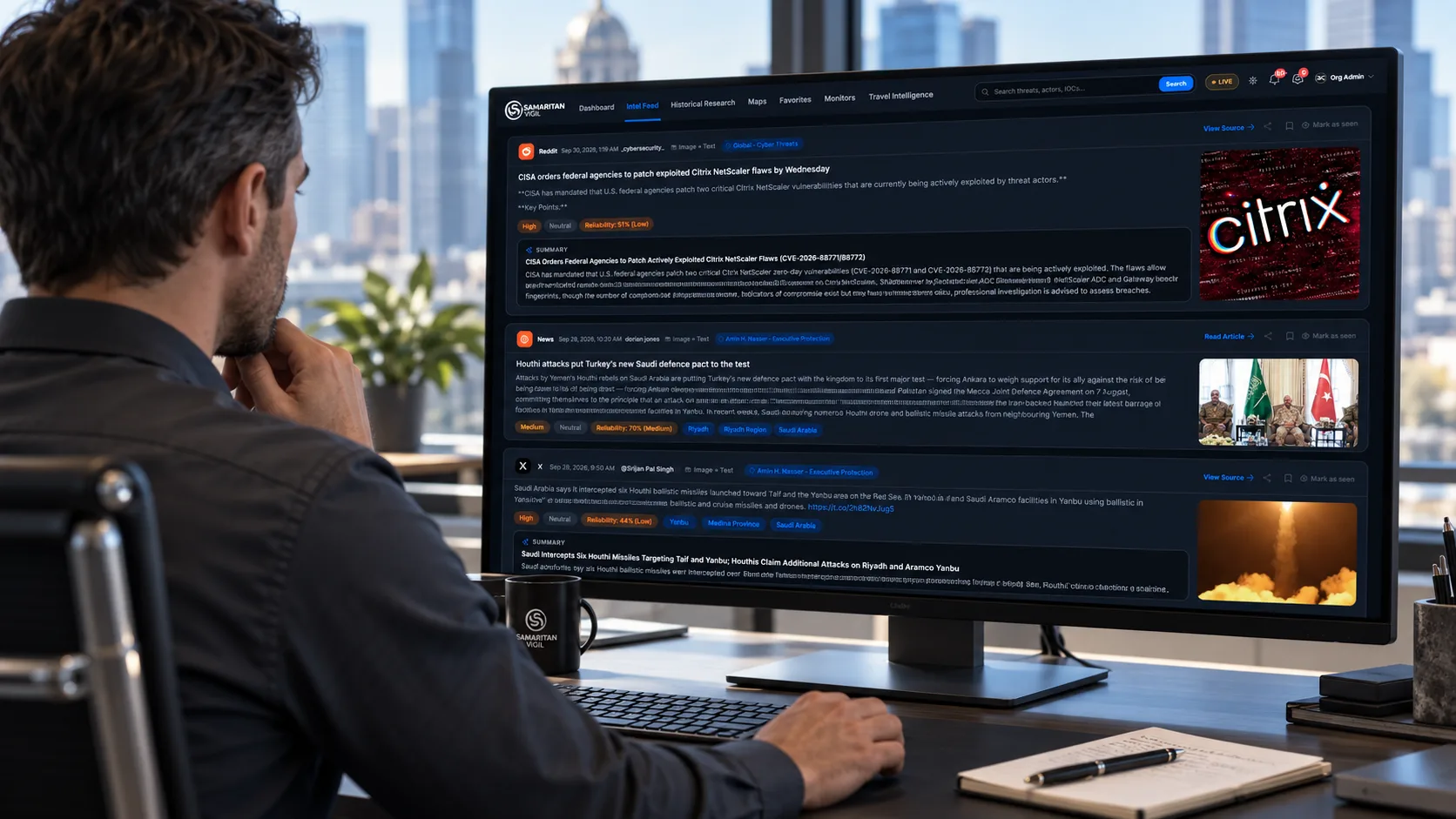
Information is not intelligence. A protective intelligence platform should help practitioners evaluate information and understand its implications for the people, facilities, and activities they protect. Timeliness, credibility, and operational context determine whether an update can support a decision.
Conversations at a recent industry conference repeatedly returned to using AI for news monitoring or "intelligence aggregation." Many attendees described agents delivering updates on a schedule. That can be useful, but regularly scheduled information is only a starting point for protective intelligence.
How does protective intelligence differ from AI news monitoring?
AI news monitoring typically retrieves, filters, or summarizes updates. A scheduled digest delivers information. Protective intelligence requires evaluating that information, assessing its credibility, and interpreting its implications for a particular protective need. Information and intelligence are not interchangeable.
Aggregation organizes material. Analysis connects it to a specific concern and supports a decision. A polished dashboard or an automated delivery schedule does not establish that this work has been done.
Why does timely information need operational context?
News reporting may reach a practitioner well after an event began. A report of an active shooter incident near a corporate facility four hours earlier has limited value for the immediate decisions needed at the outset. Credible information that the incident is unfolding now, and that emergency cordons may affect access or operations, can support an assessment while the situation is developing.
Historical reporting remains useful for later analysis. For immediate operational decisions, buyers should examine source timeliness, delivery delays, verification, and relevance to their locations and activities. Speed alone does not turn an alert into intelligence.
How does operational experience shape Samaritan Vigil™?
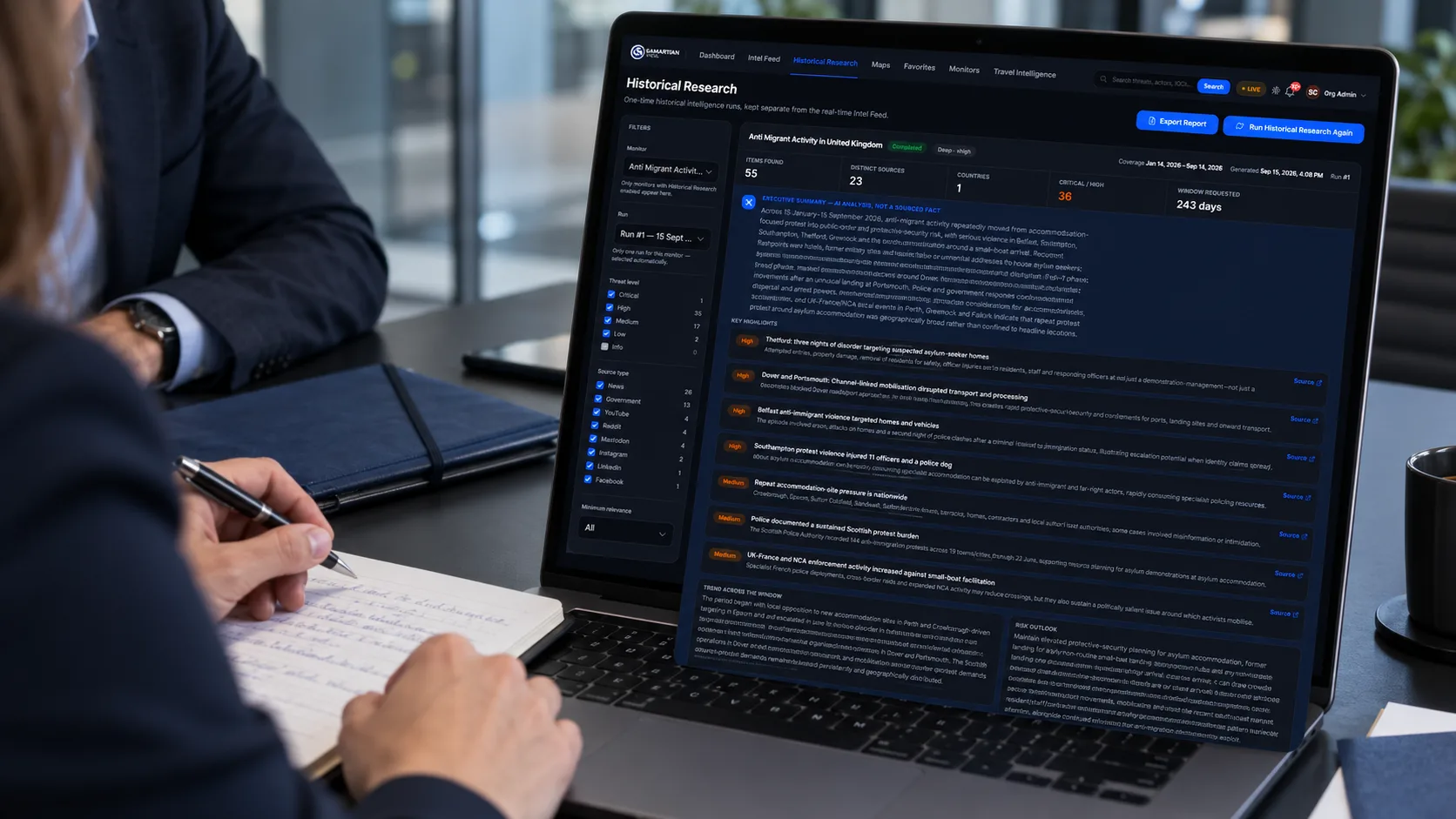
Samaritan Vigil™ was developed by Samaritan Protective Services, a security firm that has provided, and continues to provide, real protection around the world. Our experience managing risk domestically and internationally informs the platform's direction.
That experience gives our team a practical understanding of the signals practitioners need and the demands of security work. Client feedback adds specific requirements that shape continued development.
Samaritan Vigil™ uses AI as a tool, and our developers have harnessed its capabilities during development. Engineering judgment, operational experience, and client needs guide that work.
Can Samaritan Vigil™ respond to specialized client requirements?
Samaritan Vigil™'s development team has delivered specialized data integrations and reporting functionality in response to client requests.
When one client requested two highly specific data sources, the team integrated them within days. Another client requested a bespoke export feature for reporting and analysis, which our developers built and delivered promptly.
These examples demonstrate our approach to product development. Delivery timelines depend on the scope of each request.
The team also fixes bugs, implements new features, and regularly adds data sources. This ongoing work helps the platform evolve alongside client requirements.
What security and data protection questions should buyers ask?
Buyers should establish how a platform stores, processes, shares, and deletes information, including any information handled by external AI providers.
Using AI during software development is separate from sending client information to an AI provider during operation. Buyers should understand the actual data flow and the protections that apply.
Public-source material can become sensitive when associated with a client's interests, locations, or internal analysis. Evaluating a platform should therefore include these questions:
- Where is client data hosted, and which third parties process it?
- How is access controlled, and what activity is logged?
- How is information protected during transmission and storage?
- What retention and deletion practices apply?
- Does client information reach external AI providers, and can they retain it or use it for training?
Specific protections should be confirmed through the provider's documentation and contractual commitments.
Can ChatGPT or an AI agent replace a protective intelligence platform?
For limited information and updating needs, a general-purpose AI tool or custom agent may be sufficient. Broader operational requirements may call for specialized sources, reporting workflows, access controls, maintenance, and support.
The right choice depends on the work involved and the consequences of missing, inaccurate, or exposed information. Buyers should assess those requirements against demonstrated capabilities.
Evaluate Samaritan Vigil™ against your operational requirements
Samaritan Vigil™ brings together security experience, a dedicated development team, and continuing client input. Our work includes integrating specialized sources, adapting reporting functionality, and maintaining the platform as needs change.
Bring your data-source requirements, reporting workflows, and data protection questions to a Samaritan Vigil™ demonstration. Those specifics provide a useful basis for evaluating whether the platform fits your organization.
About Samaritan Protective Services
Samaritan Protective Services provides protection and risk management services domestically and internationally. Our ongoing work protecting clients around the world informs our understanding of operational risk and the signals practitioners need. Alongside these services, we develop Samaritan Vigil™, supported by a dedicated development team that integrates specialized data sources, builds client-requested features, and maintains the platform.